
Tomorrow is the deadline for submitting comments to the U.S. Department of Agriculture regarding their plan to rescind the 2001 Roadless Area Conservation Act, which prohibits roadbuilding, drilling for oil and harvesting timber—in essence all development except cattle grazing and rancher access—on the Inventoried Roadless Areas managed by the U.S. Forest Service.
That decision would open up the last quarter million acres of protected National Grasslands in western North Dakota to mineral development. Oil companies already have access to three quarters of a million acres. Rescinding this rule gives them the rest. And says “Goodbye” to the critters who live there and the people who come to visit them. On foot.
And so today I sent a letter to Agriculture Secretary Brooke Rollins, who oversees the Forest Service, telling her I think it is a bad idea. As of today, I joined thousands other Americans who wrote to the Secretary about removing the rule. You can read those letters here, if you want to—all 172,551 of them. Mine was number 172,552. It hasn’t shown up yet. I imagine someone at USDA has to approve it before it goes into the Federal Register, for the whole world to see.
I scrolled through a bunch of those letters. I didn’t find a single one that said “Yay, Forest Service! You rock! Get rid of that rule!” I’m guessing almost every one of those writers, like me, told them it was a bad idea.
You can still write one yourself if you want to. Here’s mine.
The Honorable Brooke Rollins
Secretary of Agriculture
U.S. Department of Agriculture
1400 Independence Ave.
Washington, D.C.
Dear Secretary Rollins,
I am writing to ask you to change your mind about removing travel and mineral development restrictions on the Inventoried Roadless Areas managed by the U.S. Forest Service. We have about a million acres of National Grasslands in North Dakota, and three-fourths of that is already available for development. The remaining acres, about a quarter of those managed by the Forest Service, are off limits to development. I’m asking you to keep them that way
I am reminded of the words of respected author M. Scott Momaday in his book The Way to Rainy Mountain:
“Once in his life a man ought to concentrate his mind upon the remembered earth, I believe. He ought to give himself up to a particular landscape in his experience, to look at it from as many angles as he can, to wonder about it, to dwell upon it…He ought to imagine the creatures there and all the faintest motions of the wind. He ought to recollect the glare of noon and all the colors of the dawn and dusk.”
Momaday might have been talking about any place in the millions of acres protected from development by the 2001 Roadless Area Conservation Rule. They are words you should heed, Secretary Rollins, as you consider removing that rule. Our country sorely needs places like Momady describes.
One of those places, for me, is Bullion Butte, in the Little Missouri National Grasslands of North Dakota, protected by your rule. Please, don’t abandon that rule.
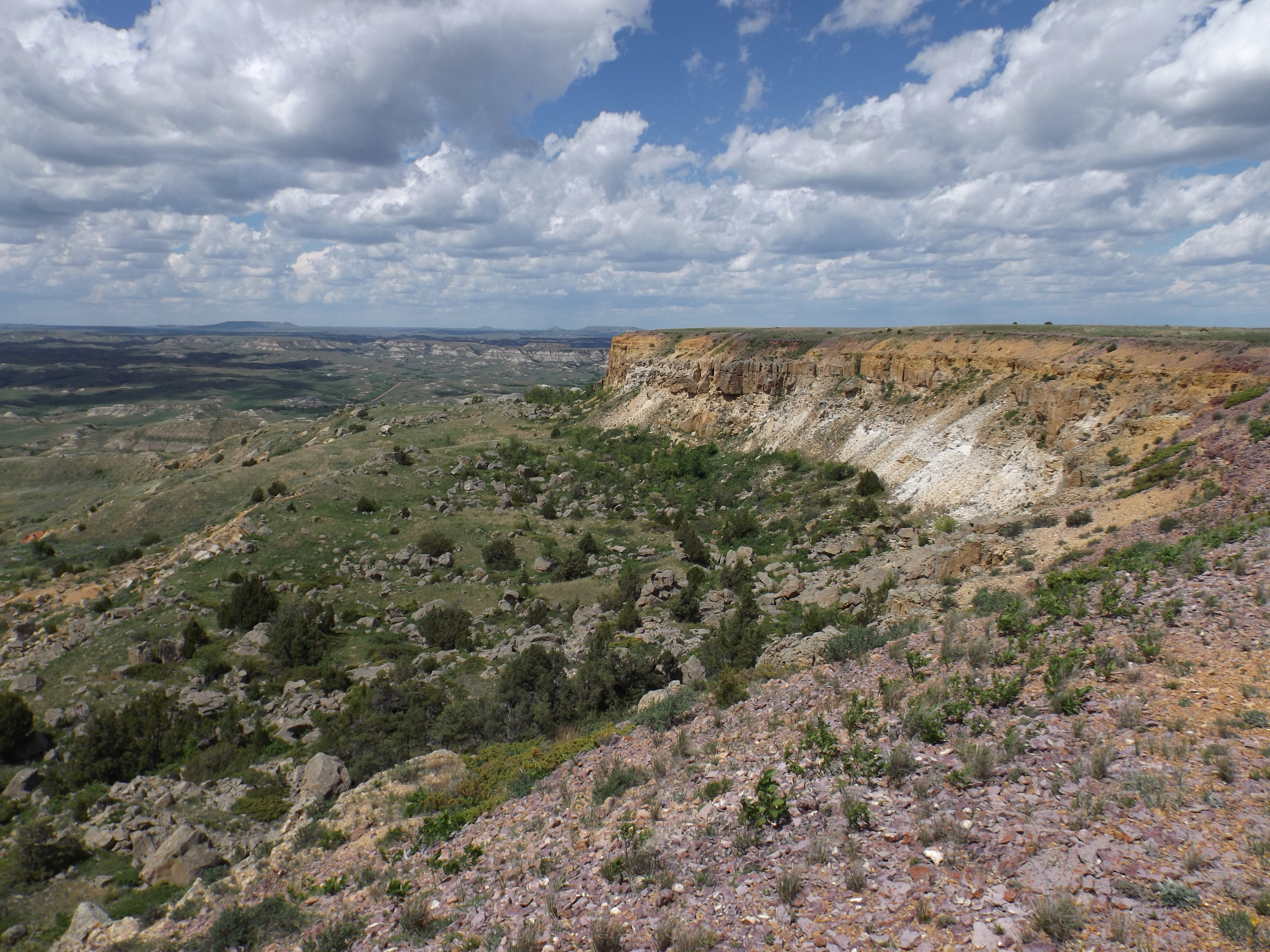
It has now been more than 25 years since I drove the winding, two-track dirt trail to the top of Bullion Butte, the largest, although not the highest, butte in the North Dakota Bad Lands. But I haven’t missed that drive one tiny bit. Because, since the implementation of the 2001 Roadless Area Conservation Rule, I have climbed that majestic butte with my own two legs at least a dozen times. And on those climbs I have come to realize that it is not just the view from the top after a bumpy 10 or 15 minute drive, but the two or three hour ascent itself, on foot, that makes this experience so satisfying to those of us flatlanders spoiled by hikes with little change in elevation and accustomed to long views of endless prairie.
At Bullion Butte, it’s the leap over the barbed wire fence from a four-foot boulder on private land, owned by the rancher I had just spoken with to get permission to cross HIS land, onto MY land, land owned by all of us: the Bullion Butte Inventoried Roadless Area.
At Bullion Butte, it’s the pauses on the way up at two cattail-fringed natural springs, often home to various waterfowl, to catch my breath and take a drink from my water bottle.
And at Bullion Butte, it’s the winding ascent, on a route of my own choosing, different each time, but always culminating in a sod-clutching, nearly vertical, final 50 yard climb to lift one leg, then the other, onto the last ledge, to stand atop that magnificent butte, taking the most exhilarating deep breaths of my life while staring out over the valley of the Little Missouri State Scenic River, which makes a 180-degree, 25-mile long, detour around this storied landmark on its way to the national park named for Theodore Roosevelt, America’s most important conservationist, who surely stood in this same place nearly 150 years ago as he searched the prairie for the buffalo he had come to hunt in 1883.
Roosevelt ascended that butte on horseback, which we can still do today, seeing the same Sharp-tailed Grouse, Pronghorn Antelope, Mule Deer, and Golden Eagles, and yes, an occasional Rattlesnake, as Roosevelt saw, without fear of being disturbed by motorized vehicles, thanks to that Roadless Rule, which I urge my government in Washington to forsake repealing, as proposed by the USDA’s Forest Service.
Please, Agriculture Secretary Brooke Rollins, and Forest Service Chief Tom Schultz, abandon your plans to repeal the Roadless Rule and leave these valuable lands to be enjoyed by the critters who live there and the humans who come—on foot—to visit them.
Respectfully,
Jim Fuglie
920 Arthur Drive
Bismarck, ND 58501
P.S. I have attached a photo of the view from the top of Bullion Butte. Surely we don’t want to see oil wells, and roads leading to them, and trucks on those roads stirring up clouds of dust in the middle of that photo.
 The Prairie Blog
ExcellentSherry Mills Moore
LikeLike
Thank-you, Jim. I sent in my comment a week or two ago and referenced some NM lands.
I spent the summer in an area of mountains near a village called Cloudcroft doing exactly what Momaday recommended. Everyone should do just that and should definitively have the opportunity. I’ve been more fortunate than most in that I lived that way for a few decades in northern MN and now have found that opportunity again.
LikeLiked by 1 person
223,862 comments as of this morning
LikeLike