
Earlier this summer, a small package arrived in the mail at our house, addressed to me. I opened it, and inside was a book, with a handwritten note tucked inside it. It read,
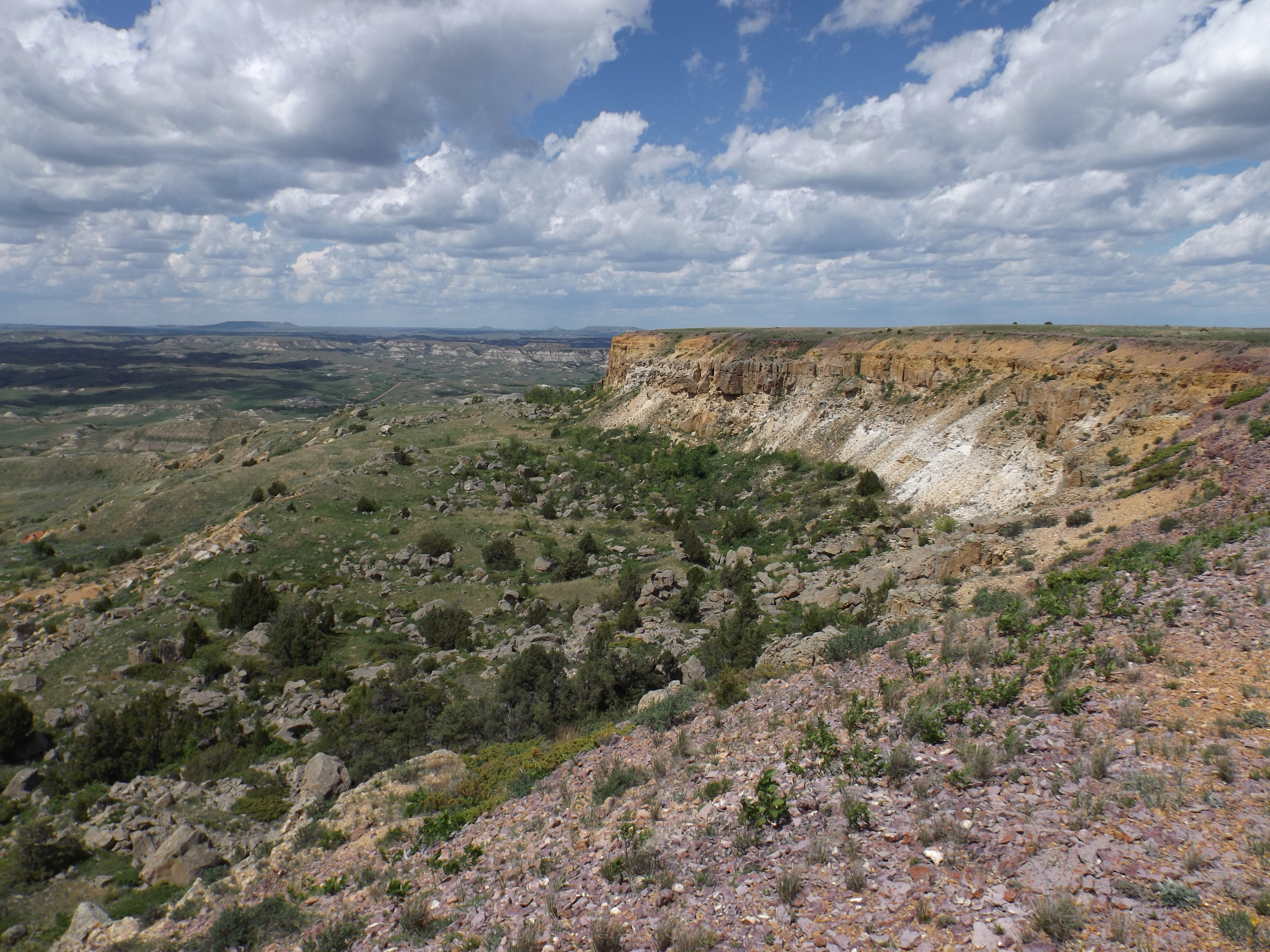
“Jim, I have always admired your writing. Accurate and courageous. Badlands, Missouri River and oil wells.
Enjoy!
Paul Legler”
I recognized the name, but for the life of me, I couldn’t remember when, or where, our paths crossed. Still can’t. That’s not unusual these days. My memory has gotten exceedingly poor lately. But I hope they do again, soon. I’m pretty sure I like this guy.
The book is called The Last Dakota Cowboy. It’s a story about a fictional (I think) fellow named Ray Adams, the sheriff in a small North Dakota town, set in contemporary times, I think, because it discusses the oil boom. It’s pretty much the story of Ray’s life, both personal and professional, both pretty good story lines. I think you’ll like them. I did.
But perhaps the most interesting thing about the book is the way the author keeps switching back and forth from first person narration to third person storytelling.
Here’s the opening paragraph of Chapter 1. This is Ray talking:
My great, great-grandfather Wade Adams rode up from Texas trailing a herd of Longhorn cattle in 1880. Texas Longhorns were used to stock many of the first ranches in Dakota Territory. They were beautiful but wild creatures given to stampeding at any moment. Wade was 17 years old at the time. He’d grown up on a farm of Scottish/English settlers in East Texas. He didn’t want to spend his life behind a plow, but apparently he saw a kind of romance in horses and cattle.
Then Legler spends a few pages giving us the background on the fictional family from Ray’s perspective, leading up to this:
I still have Wade’s blood flowing through my veins, I know that.
And then, in the very next paragraph, he switches to third person:
Mayor John Haga of the small town of Leech called Sheriff Ray Adams in April with some concerns about a new resident in town. Ray knew the town well, as he did all the towns in Lark County. Leech was a typical small North Dakota town that had been on a downhill slide since the 1930s.
The book, all 140 pages of it, continues on in that format, first Ray describing his days in Leech, then the author telling us what Ray was up to, then back to Ray.
It’s a fascinating tactic I’ve never seen before.
Here are a couple more back-to-back paragraphs.
First Ray:
I like the quiet solitude of hunting in the cold of winter. There is an otherworldliness to it. Mornings where everything is covered in a sparkling white frost. Mornings when the sky is blue, and the sun casts a golden light on the earth. Mornings when there is a strange stillness, as if the rest of the world has disappeared, and you can only hear the crunch of snow with your footsteps and see the white plumes of your breath rise.
Then the author:
Ray spent two days in early November horseback riding and doing a little coyote hunting near the Badlands. He only spotted one coyote in the far distance and did not take a shot.
Each time the author switches perspective, you have to kind of stop and catch your breath, but it flows pretty smoothly. He’s a really good writer. This is his third book. I haven’t read the first two, Song of Destiny and Half the Terrible Things, but I’m going to. I just ordered them from Amazon.
The first is a novel about a North Dakota family, a 284 page paperback published by St. Cloud University Press in Minnesota in 2013. The second is a true crime story involving North Dakota characters, 288 pages, printed in paperback by NDSU Press in Fargo, which also published his latest one. This one is part of a series being published by NDSU called A Little Book About North Dakota. True its series name, Paul’s new book is just six inches square and about 140 pages.
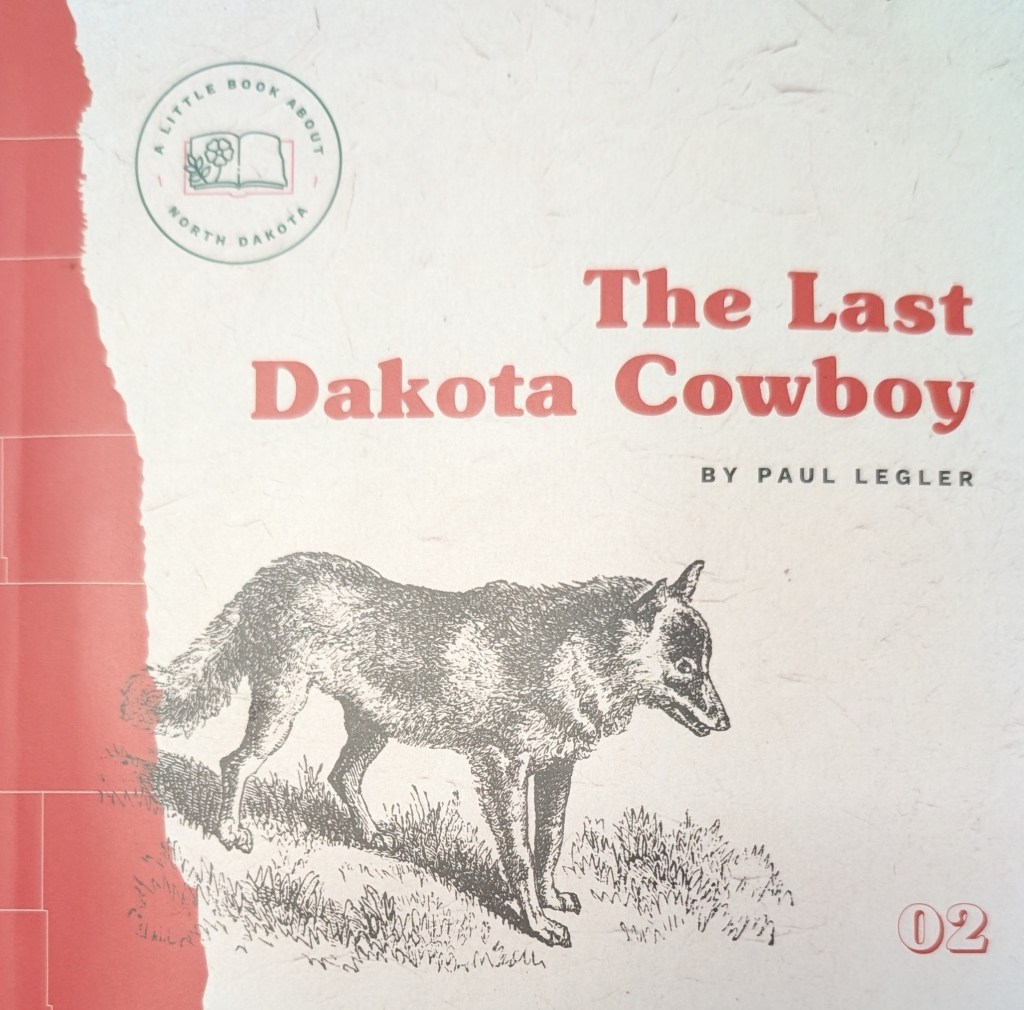
Adding to my intrigue with this book, the series editor is none other than my friend Mike Jacobs, retired editor and publisher of the Grand Forks Herald. If the book needed any editing, Mike did a fine job of it, because Paul’s writing and storytelling are first class. So thanks to both of them. And also to NDSU Press boss Dr. Suzzanne Kelley for doing this. And by the way, she’s also going to publish a book written by my wife Lillian and me later this year. I hope I like that one as much as I liked this one. I’ll let you know.
But after finishing Paul Legler’s book, I was still troubled about whether or not I knew this guy, so I got his e-mail address from his publisher and wrote to him, asking if our paths had ever crossed. He wrote right back, saying he’s not sure, but we have a few friends in common, namely Kevin Carvell, Jim Corcoran, and Nick Spaeth. Most of my readers will remember those guys. He said he used to be in a poker gang in Fargo with them. I’m thinking I might have joined them once. Nick and Jim are gone now, but Kevin might remember.
Anyway, Paul’s a retired former North Dakota lawyer, now living in Minnesota, who says he still hunts, fishes and camps in North Dakota. And he’s been writing books in retirement. I hope he writes more.


Jamestown roots, if I recall correctly.
LikeLike
Better source than the Bezos machine: bookshop(dot)org. You can specify which independent bookstore you’d like them to support, too. Delivery is via USPS. No free shipping, but you’re not supporting the Bezos.
LikeLike