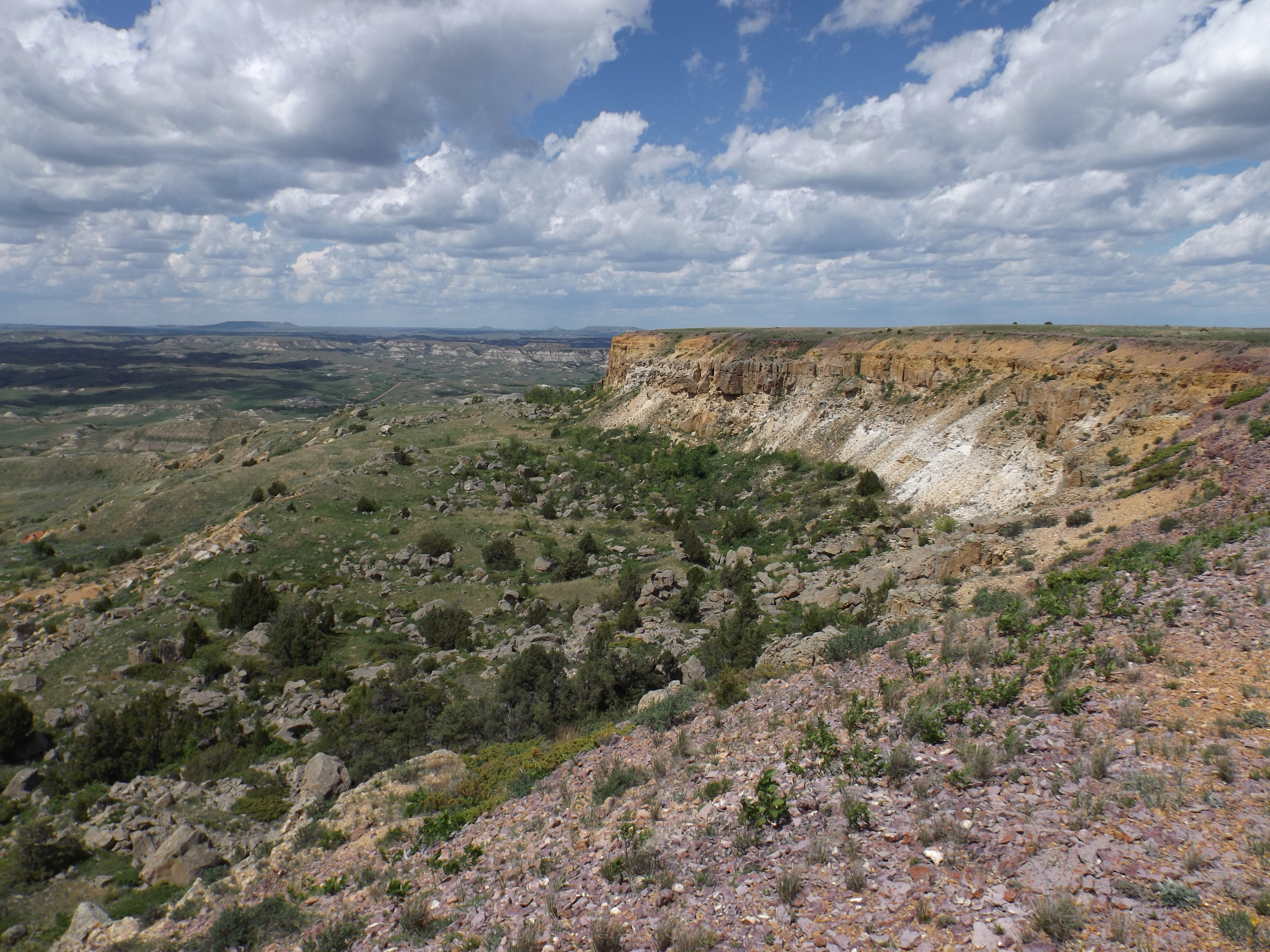

Here’s some of the best news I’ve heard in a long, long time. I can hardly wait to share it. It’s this:
The Short Ranch in Billings County, North Dakota, once the target of a bridge and oil truck freeway over the Little Missouri River, North Dakota’s only State Scenic River, has been named to the National Register of Historic Places!
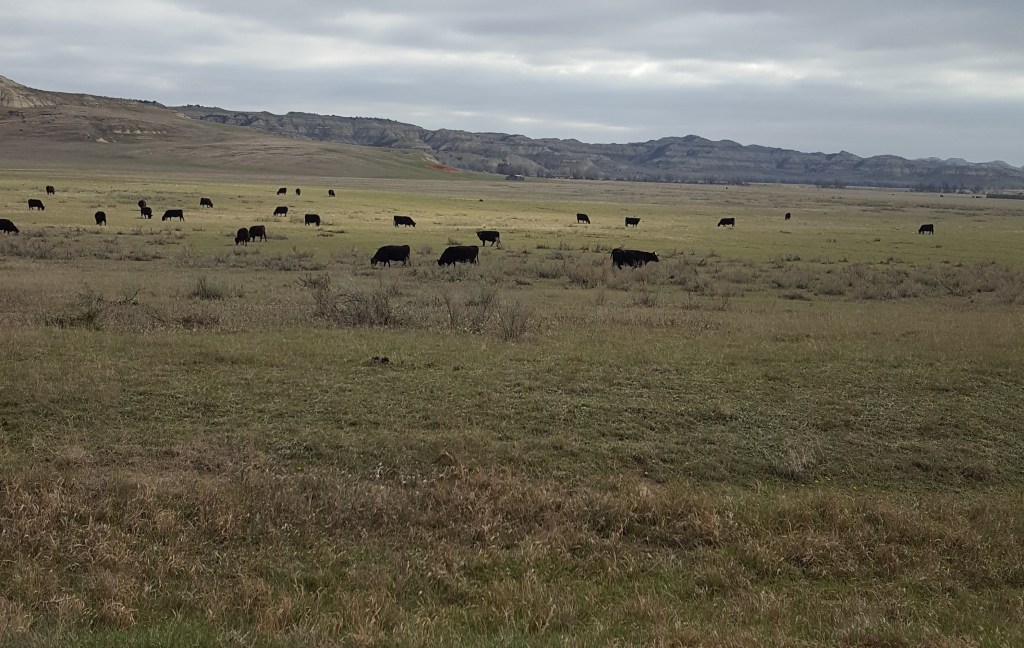
That means it is one of the most important historic resources in the United States. And I think it means the threat of a bridge through the historic ranch has gone away. Forever. Oh, I suppose it is still possible a rogue Billings County Commission could someday take another stab at it, but the listing on the National Register adds so many hoops to go through, it is almost impossible.
My readers know I’ve been following this saga for a long, long time. The first proposal to build a bridge over the Little Missouri came 20 years ago, when the Billings County Commission decided to put the bridge right beside the Elkhorn Ranch Unit of Theodore Roosevelt National Park. It would have crossed the river between the Elkhorn, on the west side of the river, and the ranch on the east side owned by the Eberts family.
There was only one reason for such a bridge. The timing was at the beginning of the oil boom in North Dakota, and the bridge was to provide a crossing for oilfield traffic through the river valley. At one time, Billings County Commission Chairman Jim Arthaud, long the bridge’s champion, said it might be used by a thousand trucks a day.
That effort was thwarted by the three Eberts brothers who owned that ranch and did not want to see a truck freeway through their place. They decided to get out of the ranching business, and sold their land to a group of conservation organizations, led by a fellow named Lowell Baeir, head of the Boone and Crockett Club, founded more than a hundred years ago by Theodore Roosevelt.
The conservation groups then gave the land to the U.S. Forest Service, and it became part of the Little Missouri National Grasslands, putting and end to that scheme.
But the Billings County Commission didn’t give up. They hired an engineering firm, Kadrmas, Lee and Jackson, to conduct an Environmental Impact Statement, which identified the Short Ranch as the next best location. (My wife Lillian and I wrote a letter oposing the bridge to KLJ for inclusion in the EIS. You can read that here.)
But the Shorts didn’t want it either, so they spent tons of their own money on lawyers, went to court, and stalled it long enough that the two commissioners who were champions of the bridge were defeated in their runs to stay in office, and a new Commission Chairman, Dean Rodne, led the commission through an at-times painful process to kill the bridge.
But that could still have been only a temporary reprieve. The two Commissioners who killed the project, Rodne and Jim Haag, serve at the will of Billings County voters, and a change in the makeup of that board could bring the idea back up again. But now, with the listing of the ranch on the National Register, that’s pretty unlikely.
But never try to guess what might happen next in Billings County, North Dakota. If someone had told me twenty years ago, when discussions of a bridge first surfaced here, that there would be a 500-million dollar Presidential Library in Billings County, with thousands of visitors a week traveling to the second least-populated county in the state, I’d have asked what you were smoking.
And never underestimate Sandy Short and her son Dave and his siblings, who dug deep into the family’s pockets and took on one of the richest counties in North Dakota, and won.
Even after spending all that money on lawyers, they dug deeper, and hired one of the best cultural resources management firms in the country, Historical Research Associates in Missoula, Montana, and that firm assigned their senior historian, a fellow named Chris Baker, to write an application for the State Historical Society of North Dakota to send to the National Register.
Baker wrote a masterpiece. The document that the Historical Society’s Lead Historic Preservationist Lorna Meidinger edited and Director Bill Peterson signed off on, and then sent to the National Register, is one of the best submissions I’ve ever seen, and I’ve seen quite a few.
In its summary, the proposal said, in part, “The Short Ranch Historic District is eligible . . . for its historic association with ranching and farming in North Dakota’s Badlands from 1904 to 1976. The ranch, which has raised horses, cattle, sheep and pigs in addition to feed crops and corn, continues to operate. It reflects a continuum from its early 20th century establishment, to the difficult decades of the 1920s and 1930s when drought and economic strife undermined the stability of ranching in the region, to the recovery of ranching in the 1940s and into the post-World War II era. The Short Ranch is an intact reflection of ranching history in Western North Dakota.”
It goes on, “The Short Ranch Historic District is eligible . . . for its association with an important figure in North Dakota’s history. Don L. Short, who served as a U.S. Congressman from North Dakota from 1959 to 1965, grew up on the ranch. Indeed, the Short Ranch defined his personal and productive life. His connections to the ranch and agriculture were directly linked to his public service career, which began in the local grazing association in 1938 and culminated with his failed reelection to Congress in 1964. Don Short returned to ranching in 1965, when his political career came to an end. Although he briefly lived in Dickinson and Beach, North Dakota, and Washington, D.C., during his adult life, Short always returned home to the ranch.”
Sandy Short, the widow of rancher Con Short, the ranch’s last steward, and her children, are not the first of the family to champion protection of the Little Missouri River corridor.
Congressman Short led the effort to stop the construction of a “scenic highway” along the river in the 1960s. It was this effort, which was successful, that cost him his seat in Congress, when he lost the support of our U.S. Senator, Milt Young, who wanted to build that road. I wrote about that a few years ago:
“The nature of Don Short’s and Milt Young’s dispute was money versus stewardship. Milt Young and Don Short disagreed about the need for a highway through an unspoiled piece of America’s scenic national treasure, the Badlands. Short voted against building a US highway through the National Grasslands. Young disagreed with him. Short’s efforts won in the long run as no US highway was ever built and the land remains unspoiled and pristine.”
You can read the Short biography on Wikipedia here. But the submission to the National Register written by historian Chris Baker has a really good biography as well. I have to believe that if the ranch had not been once owned by Congressman Don Short, with his history of looking out for the Bad Lands, this effort by his heirs who own it today to preserve it and protect it forever might not have been successful.
Still, it was the splendid work by Chris Baker and Lorna Meidinger that got the job finished. Their research, and the way they presented it to the National Register, was first class. Here’s an example of their research:
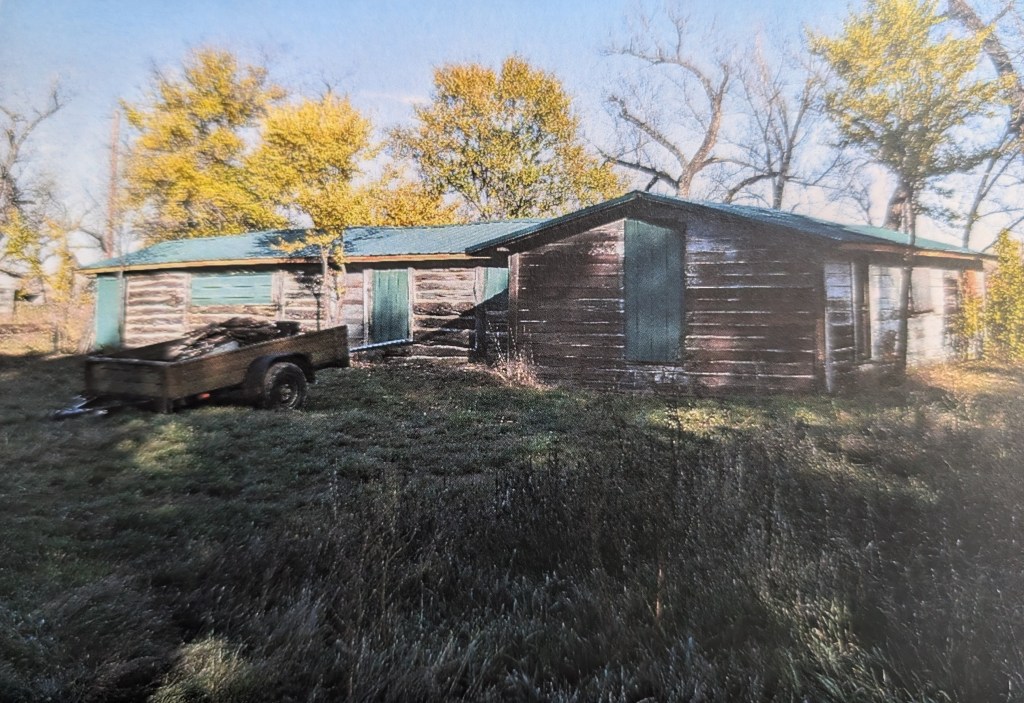
“The ranch was also a social center. Newspapers reported that ‘quite a crowd of young people went down to the Short ranch’ to attend a dance in November 1907. Three years later the ranch was listed as a voting precinct in the upcoming elections, and the ranch was the location of a ‘big barbecue that Con (Hugh) Short hosted for the Dickinson Elks, his neighbors, and guests from other Elks lodges.’ People traveled to the ranch by train and automobile. Upon arrival, they were treated to a meal prepared by Short’s ‘Japanese cook’ and spent the evening hunting game birds. The ranch also had a brush with fame: Tom Mix, one of the first Hollywood movie stars, married his wife, Olive, at the ranch in 1913. Olive worked as a cook at the ranch. Hugh Short and Tom Mix remained in contact, and the movie star planned to spend the summer of 1920 at the Short Ranch while he filmed a movie in the Badlands. Regrettably, the film was never made.”
The application includes a lengthy index and bibliography and more than 30 color photographs. I wish I could share it with you, but to my knowledge it is not available online. Yet. Lorna went to a lot of trouble making me a printed copy–almost 80 pages.
So, let me say a few things as I wrap this up.
Thank you to Sandy Short and all her kids and grandkids and descendants of Congressman Short (including his grandson, North Dakota’s Game and Fish Director, Jeb Williams), who fought this long and expensive battle to make this happen.
Thanks to their lawyers, Derrick Braaten and Tim Purdon, who fought the long court battles to stop the bridge, and whose excellent legal work won the day.
Thanks to the diligence of the staff of the State Historical Society of North Dakota for their application. It’s a feather in their cap and, any time they are successful at shepherding one of these through the process, a feather in all of North Dakota’s cap.
And thanks especially to Billings County Commission Chairman Dean Rodne, who fought that damn bridge pretty much every day for the last six years and brought Commissioners Mike Kasian and Jim Haag along with him. They stopped the bridge and made this possible.
And you know what makes me really happy? I might never have to write the words “The Short Ranch” or “Little Missouri Crossing” on my blog again.


Absolutely fantastic news! Best blog I’ve ever read. Is the application available anywhere here in Bismarck? Thank-you for your blog. Al Hardy
LikeLike
Well, Al, you can try Lorna at the Heritage Center, but it’s 80 pages long . . .
LikeLike
Thanks
LikeLike
Very nice article Jim. I am so happy for the Short family. It’s too bad that all the good people had to go thru all this mess to have things done right. Jim Muckle
LikeLike
Nice work, mister.
LikeLike